Mailchimp

There's More...

There's more to this site! Scroll down and click "View Web Version" to see the whole site. Go to bottom of the page for a list of posts or look in sidebar >> Please excuse the ads that keep this site free !

Find More Lessons and Articles

To see all the dog training posts (Over 260 pages)
Scroll down the page for the most popular titles and look in the right sidebar for links to all the posts .

SEARCH Family Disaster Dogs 260+ pages

Showing posts with label bad puppy. Show all posts

Monday, January 12, 2026

Training a Dog versus Teaching a Dog


To train a dog is to have a dog physically doing something. 

In comparison, teaching a dog is showing a dog what you mean.


Training a dog is the physical part of teamwork. 


While teaching a dog is the mental part of teamwork. 


Example 

When we teach a dog to fetch;

First we teach the dog what the ball is, by showing the dog the ball and naming it. 

Therefore, we are focusing on mental education. The dog is watching and learning without doing anything physical. 


Even if the dog is jumping up and down or sitting watching us.  We are Teaching the dog. 


Compare that to this….

Next, we train the dog to move and do what we ask. 


We toss the ball and tell the dog to go fetch. We and the dog are focusing on the physical education. 


We toss the ball. We are using a physical movement. 


The dog runs after the ball, a physical movement. 


Therefore 


To train a dog is to have a dog physically doing something. 


In comparison, teaching a dog is showing a dog what you mean.


Training a dog is the physical part of teamwork and teaching is the mental aspect.  


Amber

Founder and author 

Family Disaster Dogs 


Toby in memory of my husband Rick 

Friday, September 6, 2019

Safe Play: Top Tips For Dog Owners

We all know that dogs love to play. While encouraging exercise is crucial for optimum health, there are risks to be wary of. If you’ve recently become a dog owner for the first time, or you’re eager to ensure your pet pooch plays safe, here are some top tips to take on board.

 
Image source: https://pixabay.com/photos/dog-playing-dog-pet-cute-playful-958213/


Securing your outdoor space


Many of us enjoy watching our precious pets tanking around the garden, letting off steam with their tails wagging enthusiastically. Spending time in the open air, and letting your dog run around is great for their physical health, but it is important to ensure the environment is safe before your dog starts running free. Secure the space, look for products like specially designed fencing for a dog, and make sure any gates are closed before you let your pups run wild. Your garden may be a safe haven, but you never really know what kinds of hazards may be lurking over hedges or through holes in the fence at the bottom of the yard. Check your outdoor area on a regular basis, and if you have people visiting, always make sure you ask them to close gates and doors behind them.

Removing hazards


It’s always useful to carry out a risk assessment as a dog owner. Dogs are very smart, and their senses are brilliant at picking up danger, but they don’t always detect every hazard. Have a walk around your garden before you let your dogs out, and if you’re taking them to a forest or a park, keep your eyes peeled for objects that might cause harm.

Buying safe, suitable toys


Dogs love to play with toys, but they also tend to think that everything in their pathway is a play-thing. Your slippers, shoelaces, and children’s toys can all become part of your pooch’s play box if you’re not careful. To avoid losing your possessions and to keep your pet as healthy as possible, invest in suitable dog toys that meet safety standards. Look for products that are appropriate for your dog in terms of their size and weight and their activity levels. Buying toys is a fantastic way to encourage regular exercise, to keep your dog entertained, and to prevent boredom.

Hydration


If you have a dog that will run and run, even when the sun is beating down, it’s vital to ensure they have access to fresh, cold water. Try and avoid exercising during intense heat, and wait for temperatures to drop if it’s a hot day. Choose shady patches to play with balls or attempt training drills, and take a bowl with you if you’re going out with your dog. Hydration is key for good health. Signs of dehydration include loss of appetite, fatigue, a dry nose, dry gums and vomiting.

As a dog owner, there’s nothing more satisfying than watching your precious pup enjoying playtime. Although it’s hugely beneficial for dogs to exercise frequently, it is essential to ensure they have access to a secure environment, safe toys, and plenty of water.


Monday, January 21, 2019

Pamper Your Pooch With These Seven Suggestions


We humans are biologically built to be selfish. We make a conscious choice to be selfless with our time and our love, but when it comes down to it, we do what we can for survival. Dogs? Dogs will put themselves at risk to save our lives - and sometimes, we don’t deserve it. 

Dogs are the animals in our lives that will do everything to make us happy, from the moment we walk in through the door after work to the moment they beg for a walk, all dogs do is try to make us happy and stay loyal. Dogs are so much more than just pets, too

They are hunters, they are protectors, they are intuitive beasts that can sense more than we know, which is why there are dogs out there that can sniff out illness, drugs and even rescue people from harrowing situations. For all their loyalty and their love, dogs need to be pampered.

Pampering your pooch is so much more than just chucking them a treat every now and then. Our pets get the best attention and loyalty from us, and we have to put the effort in to make our dogs feel as loved as they make us feel. And the best thing is that our dogs love to be pampered as much as we love it. 

They love to know that they’re loved, as they show us every single day just how loved we are. With all of that in mind, here are seven ways that you can spoil your dog and make them happy, enhance their lives and making them feel loved.


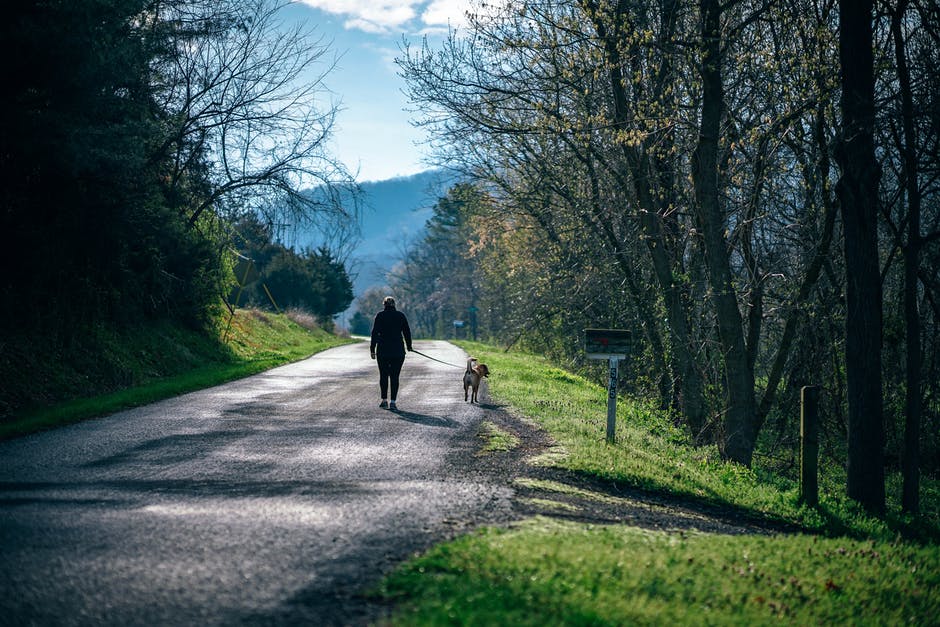
Man and Dog Walking in the Mountain


Make Your Treats Homemade.

There’s nothing wrong with the shop bought treats; they’re convenient and they’re sold as products designed for dogs. However, homemade treats? So. Much. Better. You would rather a home cooked roast dinner over a microwaved meal, right? Your dog will agree, too. Baking dog treats at home with these recipes can be so much better nutritionally for your pet. Not only can you make high-quality treats, you can make them as natural as possible. Homemade treats really go down well and you can really see their happiness at your effort.

 
Doggy Spa Day, Anyone?

Good grooming, that’s all. Dogs are the ones that look forward to a pet, a bath and a brush, and positive grooming experiences can leave your dog feeling amazing. Take your dog to the groomers for a bath, brush and a cut if necessary. You can also hire people to come and make your dog feel relaxed and calm as part of the experience with doggy massage. Pooch spa days are very popular, and you can have your dog feeling secure and reinvigorated whenever you book them in.

Plan A Pooch Vacation.

We love to take our dogs away from home for a while and go for hikes in the forests, wanders in the woodlands and gambols in the green. No one likes to put their dog into boarding if they can avoid it, but there are special dog boarders that is almost like a luxury dog vacation! Pet resorts are a thing, and they get walked group play and one to one time with a professional puppy person. You don’t have to board your pet if you don't want to, because luxury dog carers who live in their own home or who can come to yours exist!


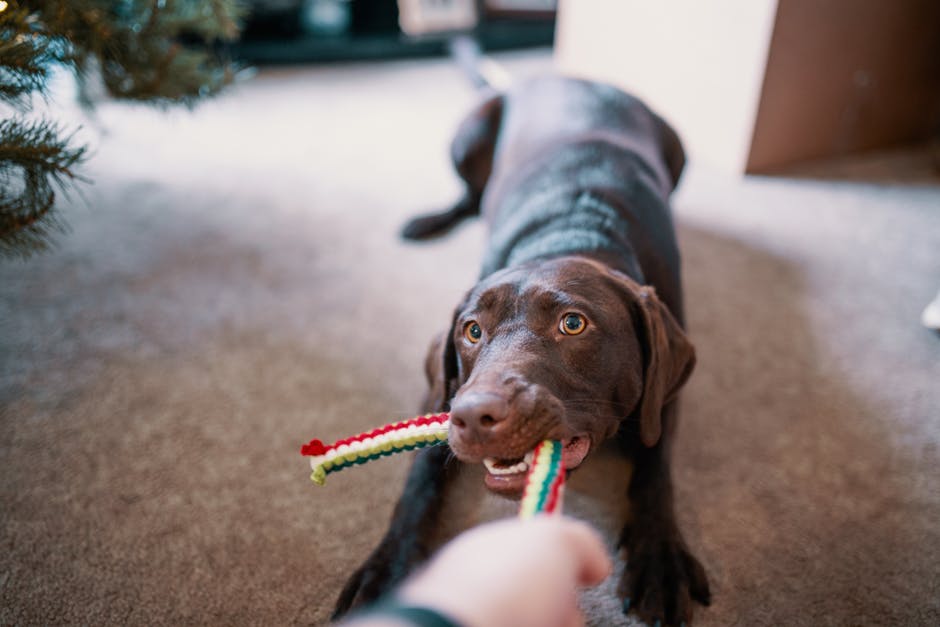
Dog Pulling His Toy


Pay For Doggy Day Care

You’re at work all day, and that’s not always fair for your dog. If you spend a lot of time away from your dog, you’re going to have to consider how much interaction they’re getting. Doggy day care can give your pet a chance to get out, run around, train and feel secure and loved while you aren’t there. The socialization is great for them and the constant running around can make them happy and tired for being ready to be at home again. You can even find daycare facilities that will collect and drop off your dog!

Vets, Ahoy!

The dog doesn't like going to the vet. You don't like taking your dog to the vet. However, it’s one of those things that we have to do even when we don’t want to. A part of pampering your dog is to ensure that they are healthy from teeth to toes, and it’s one of the ways that you can spoil your dog. His health is important, as is yours, and you can really help your dog to feel calm and happy purely by making sure that their vet appointments were attended each time.

Backyard Heaven

You have the space, and your dog needs the exercise. If you create a backyard heaven for your dog with a fence to keep them secure, shelter from the elements and a self-filling water dish that your dog can drink from when they want to. You can even add in a little zone where they can dig down and get muddy without ruining the rest of your garden. If you have a cat, and they’d be okay with it, install a doggy door to the house so yours can come and go as he pleases.

Sleeping Time

Your dog is likely to want to sleep on the sofa or up on the bed where you sleep. However, that’s not always okay! You can buy your dog a stylish bed or area to sleep piled with lots of blankets and pillows to make their space comfortable. Older pets with arthritis will always feel appreciative of a heated bed with tons of pillows that’s easy to get in and out of.

Your dog needs to be pampered and all your pet wants is your time and to know he’s loved. Take the time to pamper your pooch and let him know that you care about his well being. Dogs pick up on a lot more than we think, and we should do what we can to show them as much loyalty as possible.


Saturday, January 12, 2019

The Dos and Don'ts Of Keeping Your Dog Calm


Dogs can get excited or scared for a number of reasons, and being prepared for them is a must if we want to avoid things like awkward situations, excessive barking, mess in the house, chewed up furniture, and other things. Knowing the dos and don'ts of keeping your dog calm will help you to ensure your dog is happy and free from anxiety most of the time, and that you can both live together in harmony.

Do: Know Your Dog’s Triggers


Pay attention to what your dog’s triggers are. They may not like large groups of other dogs, so they act out at the dog park. Perhaps they hate it when you leave the house, and get terrible separation anxiety. Whatever your dog’s triggers are, pay attention and come up with a plan to help them. Usually, this means exposing them to what they are afraid of just a little bit in a way that you can control, to show them that the world is not ending.

Don’t: Throw Your Dog Into The Deep End


If you think repeated exposure to what your dog hates will help, you’re wrong. This could lead to a deeply depressed, anxious, and timid dog. You want your dog to be happy. Just because they may eventually get used to you leaving them for hours and hours on end, doesn’t mean it’s ok to do so or fair on them.


Do: Consider Various Methods To Keep Your Dog Calm


There are so many options out there that could help you to keep your dog calm, depending on what you’re looking for and what the situations is. A Thundershirt, for instance, can wrap tightly around your dog and will help to ease anxiety when there is a storm, or fireworks are being let off. CBD treats every day can help to keep their anxiety on an even keel and make them far happier - just make sure you choose the right treats and give them the correct amount. Then, there are options like anxious pet therapy. Dog massage, soothing music - the list goes on. You’re going to need to pay attention to what works for your dog in certain situations.


Don’t: Get Angry With Your Dog Or Punish Them


This is not the time to get angry with your dog or punish them. They cannot help feeling anxious or scared. Imagine being a dog and not really having any idea about the world around you. When you hear loud noises, it would seem obvious that you think something bad is going to happen. When you leave, it won’t always be obvious to them that you’re going to be back in an hour. This is why you absolutely must stay patient. Do your best to train them from when they are very young, and this will make it easier for them as they age. Training an older dog is possible, but it can be a little more difficult to get them out of bad habits that they may have picked up.

Wednesday, May 9, 2018

Clicker Training: 5 Popular Myths

from Wileypup


Clicker training. You have heard of it and even seen some folks walking around at the pet store with their bag of treats on their waist and an eager dog waiting for the sound: CLICK….Yum! Learn more about clicker training here.

You may have also heard some myths surrounding this training technique. Some “Old School” trainers and common-sense-experts may have made the case that clicker training is a fad and that the only way to train a dog is with a rolled-up newspaper and plenty of consistent reminders of “their place.”

Let’s take a look at some of the mythology a little closer:


Myth #1: Dogs will only obey if you are “dominant” over them.


The so-called “Alpha Dog” theory that is so prevalent in popular culture is supposedly based on the behavior of wild wolves. It must be correct, right? Unfortunately, the original studies that first floated this theory were actually done on captive wolves by animal behaviorist Rudolph Schenkel in the 1930’s and 40’s. 

His experiments were repeated and confirmed: Yes, when you place unrelated wild wolves together in a contained and artificial prison with limited resources, they will have bloody struggles over those resources. Call it dominance if you must, but the struggle for survival is hardly unique to wolves, or dogs, or humans.

It turns out, recent studies in wild wolf populations suggest that constant dominance struggles are not even typical of wolves (David Mech, 2000). In fact, wolf society includes a wide variety of social interactions, only some of which can be understood through the rhetoric of dominance. It’s a limited paradigm that has been grossly overextended. Domestic dogs are still paying the price for this hubris.

Are humans capable of dominance posturing? Obviously, yes. Should the sum total of human learning and psychology be based on how people act in prisons or in survival conditions? Obviously, no. 


Just like humans, dog psychology is complex, emotional, and sometimes even just plain old logical.


Myth #2: Dogs that are clicker trained will only work for food.


Clicker training does involve using food in rapid succession during the training of new behavior. Techniques such as luring, shaping and refining are used to encourage certain behaviors. When a dog offers up behavior in the direction of the final desired behavior, the sound of the click “marks” the behavior, followed by a reward.

Your dog will quickly learn how it works. He hears the click and he knows that what he was doing that very instant is what earned him a reward. For him, clicker training sessions are just a fun game he plays with his person—a game that is totally rigged in his favor!

When using reward-based training, the faster you can dispense rewards, and the more accurately you can pinpoint the correct behavior with a sound, the faster learning happens. This is why almost all professional dog trainers that have devoted their lives to competitive dog sports, training companion and service animals, and rescue dogs have shifted to using clicker training or other reinforcement-based techniques.


Food is preferred for clicker training because it can be repeated very quickly without disrupting the flow of training. Sure, you could use a toss of the ball as a motivator during clicker training, but it would really slow down the learning process. When it comes to training NEW behavior, or reconditioning emotional states in response to certain stimuli, nothing beats food. 

However, using techniques such as chaining, fading, and randomizing rewards, professional trainers know that once a behavior is perfected, it is time to move away from food rewards as the dominant source of reinforcement.

Just because you use food to teach a new behavior, doesn’t mean you are stuck with food as the only reward to reinforce the behaviors you love most. 


Myth #3: Clicker training only works for teaching silly tricks.


While it is true that you would be hard pressed to train a silly trick in less time than using a clicker (or similar audible or visual marker), it is by no means the only training domain that lends itself to this powerful tool.

In fact, professional trainers also use clickers for reconditioning work. Have a dog that lunges on the leash around other dogs? Clicker training can fix that. Have a pup that is afraid of walking on shiny linoleum tile? Clicker training is still the best training method to help her overcome phobias. 

Myth #4: Clicker training is too complicated.


  • Decide on a criteria. (Set the bar for what behavior you will accept to earn a reward.)

  • Wait for or use various techniques to encourage the desired behavior. 

  • Click the instant your dog offers the behavior. 

  • Follow with a small food reward (many dogs will actually just work for pieces of their kibble!)


There, you have the basics down. Sure, will you need some practice getting your timing down and perfecting technique? Absolutely. However, while you learn you will be improving your relationship with your dog because your training program is built on trust and focusing on success rather than failure and fear. 

Myth #5: Trainers that use clickers don’t believe in punishment.


While there are some trainers that claim to never use punishment in their training, the fact is that most trainers do use punishment in the “proofing” stage of training. However, people that understand the power of reinforcement in training don’t use punishment as a “go-to” method.

Instead, professional trainers follow some basic guidelines before bringing punishment into play:

Manage the environment to make problem behaviors impossible to practice as the first step in extinguishing “bad” behavior.

Focus on training positive alternative behaviors FIRST, ignoring inappropriate behavior as long as it is not unsafe.

Never use punishment in formal training contexts since the goal is to have a confident, focused, engaged learner that has no fear of volunteering new behaviors—critical for shaping and refining behaviors.

Take advantage of the power of non-physical punishments such as a “Time Out” when adding a consequence to an already learned behavior. This and other “negative punishment” techniques operate by taking away something good (like freedom to run around) as a means of communicating to the dog that xyz behavior is not paying off!

Conclusion


Hopefully this article has encouraged you to reconsider clicker training, and other rewards-based training programs by debunking some of the common myths surrounding this wildly effective training technique.

If you have a chance to get involved in training classes that teach this technique, definitely give it a try. You and your dog will be well on your way to developing a language to communicate with each other based on rewarding success. Your dog will quickly gain confidence, and so will you!


Note from Family Disaster Dogs


Many people who visit Family Disaster Dogs are training dogs to find people and working actual Search dogs or police K9s and scent discriminating dogs. 

For trainers and handlers who will be working dogs in garbage dumps, and landfills full of discarded food it's easier not to train with food :) and here's why.

Most working Search dogs or K9 are not trained with food because these dogs have to work in garbage piles and dump locations that contain discarded food !

Many drugs, explosives and human cadaver parts are hidden in garbage cans too. Especially at airports and public places where dogs work to detect and discriminate illegal items in garbage cans where food is discarded. 

Not only will a food rewarded trained dog either want to eat the discarded food in the public garbage can instead of continuing to look for the scent he was looking for; the dog becomes confused as to why he could not eat the food in the can instead of the food in your hand...the reward just came before the job was finished..so he will think he is done finding the drug or explosive scent he was put on. 

So to use food rewards in training a dog who will be looking for items in food creates extra steps in training that have to be made to insure the dog only accepts the food in the hand first and foremost which adds more to the teaching or the dog would have to be untrained on food in the can which again is another step and if the dog is not confused by then, the handler is :)
  
Also how does the handler or court attorneys, judges and jury in a criminal case know if the dog is indicating (testifying) on the food in the backpack or the drugs hidden if the dog is trained with food ? A good lawyer , jury or judge will throw the case out and the criminal get away. Bloodhounds go to court all the time and have to prove exactly what they are indicating.

A bloodhound is not expected to do obedience work to pass certification qualifying to work under fema and other agencies like other breeds of dogs that must be obedient because we want the bloodhound most determined (some call stubborn) once on a scent trail. There is no stopping a good bloodhound so consequently a bloodhound on a food trail is not going to stop until dinner is done :) The dog will expect us to find the items without him, job done, he found the reward and is sitting down to eat! 

Featured Lesson

Use a Pet Dog to Find Lost and Missing Children, Seniors, Friends and Pets

Copyright  2024 Amber Higgins Use your dog to find Family and Friends, especially disabled and special needs loved ones. Even other pets! Th...

Author Amber Higgins and Washee

Author Amber Higgins and Washee
Click Pic to Visit my author page

Advertising Disclosure

Disclosure: Some of the links on this site are affiliate links that I have reviewed and approved. Additionally links to products such as at Amazon are products I have personally used. Affiliate links means that, at zero cost to you, I will earn an affiliate commission if you click through the link and finalize a purchase. The proceeds earned are not much and used to keep this Family Disaster Dogs website free to the public. Thank you for your support.

Welcome UK and Worldwide Visitors

Welcome UK and worldwide visitors and friends to Family Disaster Dogs online! Although I'm an American author and dog professional the worldwide web has given me the opportunity to connect with some wonderful folks who have contributed pictures for my books. The "Start Mantrailing" book features RRI K9 North Scotland trained Search and Rescue Dog "Amber" on the cover and her teammates training in the book, plus American dogs using my training methods. A portion of sales of the Start Mantrailing book or copies were donated to RRI North Scotland. The children's picture book "My Puppy Can Find Me" has my daughter and bloodhound as illustrations by UK cartoonist Scotty King. You can find the books on Amazon UK or use the contact page to order from me. When you click the links will take you to your own county pages of this site.

Popular Posts

Past Posts and Lessons

To see all the lessons and dog care articles on this site:

Look at the dates listed in the sidebar to the right and below, click one date to bring up all the articles and lessons published at this site in one page for each date.

There are about 300 pages that have been published here at Family Disaster Dogs since 2011.

New lessons or dog care articles continue to be posted weekly.

The list is the easiest way to find all the information here.

Enjoy the search and follow that dog!

Help Keep Free Books Free for everyone-Donate Today!

Read and Review my books on Goodreads

Family Disaster Dogs

Purchases from affiliate links help Keep Family Disaster Dogs Site Free!

Check this deal out and support us! These products on amazon sell fast!

https://amzn.to/3U4siv6