Mailchimp

There's More...

There's more to this site! Scroll down and click "View Web Version" to see the whole site. Go to bottom of the page for a list of posts or look in sidebar >> Please excuse the ads that keep this site free !

Find More Lessons and Articles

To see all the dog training posts (Over 260 pages)
Scroll down the page for the most popular titles and look in the right sidebar for links to all the posts .

SEARCH Family Disaster Dogs 260+ pages

Showing posts with label tracking dog. Show all posts

Sunday, October 22, 2023

About Family Disaster Dogs


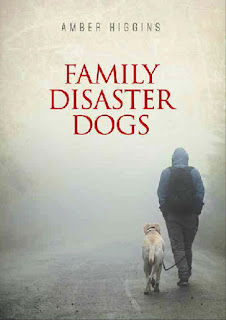
Click above to preview the Family Disaster Dogs book


The Family Disaster Dogs books,  website and social media give dog owners a way to learn how-to prepare for disasters with pets by offering online posts and lessons that encourage the training of family dogs to assist in disasters and how-to use a dog to find people who may go missing. 

Visitors worldwide browse over 260 blog posts of dog care and training at familydisasterdogs.com where books, courses and emergency resource lists are available and regularly updated with new content.


Family Disaster Dogs has a huge following of furbaby households and global emergency response teams who frequent the site for information on current natural disaster events, dog training and preparedness for floods, hurricanes, tornados, evacuation and wildfires.

Author, Amber Higgins' work was first published in the 1990's offline newspapers and magazines. She has over thirty years experience in the pet industry and dog breeding. With fifteen years devoted to volunteer K9 Search and Rescue with her Bloodhounds and German Shepherd dogs. The books are available on the Amazon's distributor network in paperback, kindle and audible everywhere. She lives with her wolf and two bloodhounds.

The Books

Family Disaster Dogs

Evacuate with Your Dog's Help (Includes Evacuation Supply List, Pet CPR)

My Puppy Can Find Me children's book

Start Mantrailing Step by Step

A Squirrel Planted an Acorn ( A short story about nature)


Click to visit Amber's author page


Wednesday, March 20, 2019

How to Train Dog to Return to Owner or Handler


 Teaching Refind or Return to Handler


Teaching your family dog to “refind” or return to handler after they find a person or object is another way your dog can indicate or alert you of the find. 

Area search dogs and air scenting dogs who work off leash to cover large areas of land like in an avalanche are usually taught upon finding a person or evidence to return to their handler and bring the handler back to the person or location. 

Dogs who work on a leash have the handler with them; therefore there is no need to go back to the handler. I teach my Bloodhounds to take me back to my truck or home on command because I seldom know where I am once we trail a person several miles in the woods. 


Back to the truck !


I teach my dogs by simply telling them “let’s go home” or “back to the truck” each time we start back after we are finished with the training session or real search. Then if I am ever lost, I know, I can ask my dog to take me home or to the truck. 

Family Disaster Dogs on and off a leash can use this skill to bring people and items back to you if you are unable to move or wish to stay with another person. If you are sheltering in place then you can send your dog out to get an item and bring the item back to you.

Let it be known that some breeds of dogs will not “backtrack” or return the way they came. Bloodhounds and other hounds especially do not like to go backwards on the same scent trail. Some breeds and bloodlines are bred not to backtrack and when a dog is trailing and tracking we do not want them to backtrack because this defeats the purpose. 

Another reason backtracking is not encouraged or bred for is that if a dog encounters a place where the quarry or person walked in circles the dog will get lost in the scent overlapping on its own trail.  

A good hound will hit a place where a person or animal walked in circles and go right in one side of the circle then out the side the person exited while another dog will smell and smell, going in circles themselves trying to figure this puzzle out. Give time they might figure it out or sit there and look at you to figure it out.


Daisy doesn't want to go back the way we came

With backtracking in mind, if your family dog refuses to go backwards on a course to return to you or the person then you may have a very smart dog on your hands that you have to out smart by taking a different route back.  Just move a little bit to one side of the original trail the dog traveled on, maybe 30-50ft so your dog gets a chance to use a different path to reach you.

We do not want to teach them to backtrack either so moving off of the course is a good idea and changing the locations will help too.

Refind and return to handler can be taught at the same time as all the lessons here at Family Disaster Dogs.  This skill is incorporated into your other lessons as you practice with your dog you will add the instructions below into the end of the lessons.

Always praise your dog for a job well done.


Instructions

To teach your dog to return to you after finding a person you will send your dog to search or find them as detailed in the other lessons.

When your dog arrives at the person the dog is rewarded by that person then told by the person to “go back” or use your own name, like “Go to Joe”. 

You stay a distance away when your dog finds the person and you call your dog back to you after the other person praises your dog. 

You praise your dog when they come back to you then ask your dog to find the person again, sending the dog back to “refind” the person.  When the dog refinds the person the second time, if you are not there by then, the person should send your dog back to you again until you reach them as a team. 

Repeating this will help your dog learn they are bringing you to what they have found a person. And, they are not only running between two people. Dog’s like to have a purpose for what they are doing otherwise it is play.

You should adjust the distance between you and your dog according to your own dog’s way of working. Some dogs run along at a fast pace while others work slowly. Some find the person long before you get there no matter how hard you try to keep up while others might seem to take their time smelling every bush. Each dog is different. 

The trick is to give your dog space to find the person and return to you. So don’t follow to close at first then later add more distance to the space your dog has to cover to return to you. As you give the dog more distance to cover they will learn to find you as you get out of sight and to bring you back to the person as both of you come back together.

In time and with practice your dog can be sent out to search over a large area of land to scout and pin point locations for you then come back and take you to those locations.

Adding refind or return to handler to area searching and evidence or building searches saves you valuable time because your dog alone can cover much more ground that we can. 

When your dog is searching every item they find that holds the scent of the person they are looking for will be found too. This is evidence of where the person has been.

When your dog takes you to objects you must always believe the item belonged to the person you seek because your dog is showing you a clue. Trust your dog.

In the next lesson we’ll be discussing sending your dog to retrieve first aid kits, food and other emergency supplies by name that you might need if you are trapped or unable to leave people who are injured. 


After over 30 years working with dogs, I really do believe any dog, any age, any breed can learn to do some of the lessons here to help their families and loved ones be safe and survive in an emergency situation. 

The smallest or oldest dog can learn to bark or nudge you in an emergency to alert you to danger, every dog is able to help in some way just as they would as a group or pack. Never underestimate your dog. 

Please pass these lessons on so others may benefit. 


Sunday, December 30, 2018

Training Your Family Dog to Look for a Lost Person

Teach a dog to look for lost or missing persons

Family Disaster Dogs Daisy and Willie

This dog training lesson is easy to do at home and teaches a dog to use an article belonging to the missing or lost person to find that person. 

In dog work this is considered and often called scent discrimination because the dog learns to smell the "scent article" and look only for that scent or person. 


It is very Important to not contaminate the article with your own and other scents. 

Read More (click) and go to the free lesson page for many posts about scent and how-to teach working dogs tracking or pets to help its family locate missing family after a disaster. 


To get Started


Training your family dog to look for a Lost Person


You will need:

  1. Your dog
  2. 1 person who will hide from the dog
  3. 1 sock, or hat or glove the "scent article" from the person who will hide

You can do this lesson indoors or outside with or without a leash, depending on the dog.


Start with a person your dog knows and hold your dog by its collar as the person slowly runs and waves at the dog to a hiding place that is easy to find and with only one turn away right now.

As soon as the person is out of sight,,, 

Hold the scent article, the person's sock, to your dog's nose, say "Smell" and then turn your dog loose and say "Find so and so" use the person’s name, follow your dog to the person.

Your dog, no matter what age will attempt to find them.

If the dog has a hard time at first it is okay for the person who is hiding to call the dog or encourage the dog to find them so the dog gets the idea. Later the person will not speak or move but hide.

You will learn as we get further in training to read your dog's clues, in the meantime, learn to watch your dog's moves and body language for indications and reactions that lead to the trail or person.

If the dog does not go fairly quickly to the person then encourage the dog to go with you and show the dog with excitement how fun it is to find the person. 

When they find the person, praise, praise, praise by you and the person shower this dog with attention and they will be so happy to do this again, you'll hardly be able to hold him. 


Here is Bo taking scent from the scent article in a plastic bag before we start on a wooded trail looking for a person who is hiding. Bloodhounds often put their whole nose in the scent bag.

A leash is not needed at first with your pet dog if you train in a fenced yard or with a dog who is use to free roaming.

Check out the Family Disaster Dog book for all the lessons in paperback and kindle!


Thursday, November 15, 2018

Lesson 1 of 2: Planning Dog Training and Mapping Tracking Courses


Planning Training Courses
1 of 2 parts
The Purpose of a Training Course or Route
This lesson is being posted in 2 parts
(Go to part 2) 


When you are training your dog there are often times when we have to set a course up that will be similar to what we encounter in real life. Obedience courses and agility courses are two that come to mind most people have heard of.

In training the family disaster dog we want to set up courses and lost person scenarios that we might encounter during an actual emergency. These courses help us and our dogs to know what to expect, consequently, we learn what to do in an actual event.

To set up a training course, we have to think of what we might encounter along the way and put the ideas into the training course. This is prepared ahead of time. After the course is set up then the course has to be aged. Aging the trail or course will be covered in advanced lessons.

How the training course is set up depends upon what level you are training.

Once you and your dog have the general idea down of how to find a person and what evidence to look for, it is time to further your training by using well planned and prepared courses that include tracks, trails, and scenarios.

It’s time to advance to life like training!


In doing these courses we are playing and pretending this is a real life rescue and the most important thing to remember is your dog will always find its man! (Or woman, child or object)

This most confusing aspect of search dog training is also the down fall of many handlers who fail to follow the golden rule. The dog is always right not the trainer or handler.

When a police dog fails to find a person it is never the dog’s fault but it is the handler’s fault for reading the dog wrong.

To avoid failing in training, never let your dog fail to find what they have been told to find otherwise your dog will not look because this type of training is actually for you to learn to read your dog and follow your dog. The dog knows how to find anybody or anything on their own but the dog does not know how to find somebody with you tagging along telling him what to do.

How these factors come into play when your dog is searching for a lost person and how to use these factors in preparing a training course to work your dog on will help you and your dog to figure out the puzzles you come across on an actual search.

Planning a Training Puzzle

When considering how to set up a training course three factors come into play, the wind including weather, contamination and location.

Wind and weather conditions always affect how you will read your dog working the scent. The wind blows the scent as the wind moves therefore knowing the direction of the wind is vital. Weather such as rain or freezing conditions affect the scent as well therefore these factors should be considered as you follow and read your dog.

Contamination is anything that has been in the area of the training course. I mean everything including car exhaust, chemicals such as spilled gasoline after an accident; other people who have walked in the area contaminate the scene.

Animals who have crossed the location up to 24 hours earlier can lead your dog off course if your dog is inclined to follow the deer or rabbit instead of the person’s scent you are looking for. A known dog walking path is not the best place to train a tracking dog.

Here's my book for children to learn too!


Indoors cleaning solutions, tobacco smoke and odors we do not smell can contaminate the scents the dog is following and a novice dog has not learn how to work these odor puzzles out yet.

Location plays a role because different terrain creates different scent action. Such as wooded areas hold the scent closer to the ground while a cleared field allows the scent particles to move and disperse over a larger area. Drainage channels and clear cut areas where power lines run through make wind tunnels that can carry the scent in a different direction then where your dog goes.

During all of these experiences your dog will continue to work the trail by working out the scent puzzle if you allow the dog to do so. The dog may follow the scent as it is blown down a wind tunnel to the point where the scent is so thin the dog turns back and backtracks to a stronger scent point where they began the tunnel.

Then the dog continues on the right trail. The important part of this training and in actual search events is to remember to trust your dog and follow them through the puzzle. If you stop the dog thinking oh the person never went down that steep hill then the dog can not finish the puzzle and chances are you will fail.

The same holds true when your dog is following a animal scent or the wrong scent which puts them off the trail you intended.

Never underestimate your dog or where a person who is afraid might hide or go.


Three groom dogs I once knew and these kids could find their owner in a heart beat!

Never underestimate your dog!

Learn to Read your Dog!

Your dog is always right!

Click Continue to Part 2


Read all the lessons in the Family Disaster Dog book below


Friday, September 2, 2011

Lesson 2; To Leash or Not

To Leash or Not to Leash 

This lesson covers why some dogs use a leash when looking for lost people and other dogs do not. This will help you decide which way works best for you and your dog.

How to use the long tracking leash when Trailing and Tracking with your dog is taught during each lesson and outlined on Lesson 1, Tracking Overview.

 As you can see by the pictures of Sambo working in a harness, we are using a very long leash or lead.  A long tracking lead like the one pictured is most often used to allow the dog extra room to work an area over without the handler interfering.

Mantrailing Training

Most Bloodhounds are worked on a leash while other breeds are often worked off leash due to other breeds paying attention to a handler more then a Bloodhound does.

No pun intended, a Bloodhound on a trail is working from natural ability and instincts without any direction from a handler while other breeds are working a trail from the training they have received and the commands from a handler. The Bloodhound is trailing and the other dog is tracking, there is a large difference in the two ways the dogs use their noses.

The leash below is the type a Bloodhound Handler uses..A Retractable leash is not recommended.


Another reason a long leash is used with a Bloodhound is that the Bloodhound is known as a silent tracker/trailer because the dogs generally do not bark or bay while running a trail like Beagles and Coonhounds do.

Some Bloodhounds do get excited at the beginning and end of a trail and some will work very quickly but others are more caution and careful not  to miss any smells. They work slowly and surely.

Bloodhounds are different in many ways from other breeds which is why there are few Bloodhounds working in comparison to other breeds. Bloodhounds do not train well or respond to directions from handlers well while using their noses and this makes them difficult for some people.

Consequently, we have to use a leash when we ask a Bloodhound to find a person in order to stay with the dog and know when the dog finds the person, otherwise a loose Bloodhound might find the person and happily lay down with them to cuddle instead of coming back to let the handler know they did the job.

Other breeds are taught to find a person off leash and return to the handler or bark to indicate the found person so the handler can find them. These dogs rely on the owner or handler to work with them in finding the person. Obedience training and off leash hand signals or direction can be given to the dog by the handler so the two work as a team in searching for evidence or a missing person.

Your family dog can learn to work with a leash like a Bloodhound and also off a leash like an area scent dog or an off-lead tracking dog. You will will learn the difference between tracking, air scenting and trailing in upcoming lessons. The method you decide to use will depend upon your dog. Not the breed of your dog but how well your family pet does what you say off a leash.


Many family dogs never use a leash and pay attention very well to their owners. These dogs will respond to training faster then the house dog who is use to be kept on a leash and walked or a dog without any training. Do not worry either with or without a leash works for a family disaster dog because this type of training does not require obedience.

If your dog has no other training then you can train your pet like a Bloodhound, on a leash.

If you want your dog to understand commands then read through the other lessons on this blog to teach your pet manners and how to behave in different situations while responding to sit, come, stay, down, heel.

You can also take an obedience class offered in your community while you continue to work on the disaster dog lessons.

While attending other classes, Please be sure and spread the word about Family Disaster Dog Site so others can learn how to use their dogs during emergencies too.

Email us for Free F.D.D. Posters/Handouts to give out or post in your community. 


Any age of dog can be trained using a leash or not.

The older dog may take more teaching then a puppy. Do not get discouraged if your dog does not learn right away. This is supposed to be fun and the family dog, like all Search Dogs, are in training for a life time not for a short time.

Unlike other dog training classes this  type of training does not require a time agenda or daily practice. Family Disaster dog training can be done any time you have spare time because all you do is go out and play with your dog whenever you want, wherever you want.

You have the rest of your dog's life to train and play for a disaster which we hope you never have to use. Keep this type of training fun for you and your dog.

How to use a long leash and work a search dog on a lead will be covered on the Leash Work lesson.

How to train your dog to work off leash will be covered on the Off Leash Lesson Post.


Off leash and On leash dogs in training should own a Leather Leash like this 6 ft long leash pictured.


Click on Links on the Left to go to Another Lesson

Featured Lesson

Use a Pet Dog to Find Lost and Missing Children, Seniors, Friends and Pets

Copyright  2024 Amber Higgins Use your dog to find Family and Friends, especially disabled and special needs loved ones. Even other pets! Th...

Author Amber Higgins and Washee

Author Amber Higgins and Washee
Click Pic to Visit my author page

Advertising Disclosure

Disclosure: Some of the links on this site are affiliate links that I have reviewed and approved. Additionally links to products such as at Amazon are products I have personally used. Affiliate links means that, at zero cost to you, I will earn an affiliate commission if you click through the link and finalize a purchase. The proceeds earned are not much and used to keep this Family Disaster Dogs website free to the public. Thank you for your support.

Welcome UK and Worldwide Visitors

Welcome UK and worldwide visitors and friends to Family Disaster Dogs online! Although I'm an American author and dog professional the worldwide web has given me the opportunity to connect with some wonderful folks who have contributed pictures for my books. The "Start Mantrailing" book features RRI K9 North Scotland trained Search and Rescue Dog "Amber" on the cover and her teammates training in the book, plus American dogs using my training methods. A portion of sales of the Start Mantrailing book or copies were donated to RRI North Scotland. The children's picture book "My Puppy Can Find Me" has my daughter and bloodhound as illustrations by UK cartoonist Scotty King. You can find the books on Amazon UK or use the contact page to order from me. When you click the links will take you to your own county pages of this site.

Popular Posts

Past Posts and Lessons

To see all the lessons and dog care articles on this site:

Look at the dates listed in the sidebar to the right and below, click one date to bring up all the articles and lessons published at this site in one page for each date.

There are about 300 pages that have been published here at Family Disaster Dogs since 2011.

New lessons or dog care articles continue to be posted weekly.

The list is the easiest way to find all the information here.

Enjoy the search and follow that dog!

Help Keep Free Books Free for everyone-Donate Today!

Read and Review my books on Goodreads

Family Disaster Dogs

Purchases from affiliate links help Keep Family Disaster Dogs Site Free!

Check this deal out and support us! These products on amazon sell fast!

https://amzn.to/3U4siv6